
Brazil’s largest city ofSão Paulohas received itsfirst delivery of pure electric BYD busesas part of azero emission pilot project.
The project involvesgenerating clean energy at a solar farm that uses BYD’s locally produced solar panels.

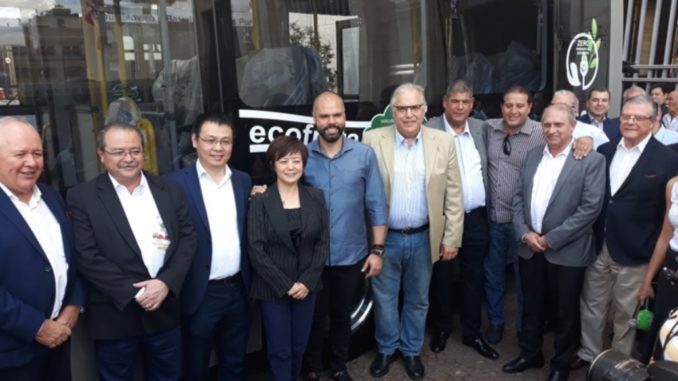
A symbolic ceremony acknowledging the delivery of the first 15 units took place at theSão Paulo City Hall. It was attended by dignitaries includingBYD’s Global Vice President, Ms. Stella Li; thePresident of BYD Brazil Sr. Tyler Li; theBYD Brazil Vice President of Sales, Mr. Wilson Pereira; theMayor of São Paulo, Mr. Bruno Covas;Mr. João Octaviano, Municipal Secretary of Mobility and Transportation of the City of São Paulo; Mr.Milton Leite, President of São Paulo Town HallandMr. Paulo Cézar Shingai, President of SPTrans.
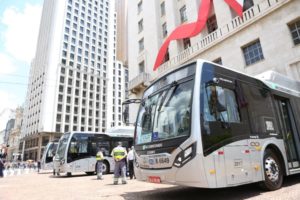
Equipped with a proprietary lithium ion battery,each BYD D9W is able to cover a range of 250 kilometers. It has afull passenger capacity of 80 and is wheelchair-friendly. The first three vehicles that will make up the project are currently withTranswolff, a local subsystem company which operates in the south of the city.
BYD’s Global Vice President Ms. Stella Lisaid,
BYD has been a global leader in pure electric bus sales for four consecutive years, delivering more than 45,000 units worldwide. The company will continue to make large investments in its local operation, sharing with Brazilians its mission to promote technological innovations for a better life.
Our recent deliveries, not only in the Brazilian market, but also in Chile, have made BYD the leader in the electric bus sector in South America – saidBYD Brazil’s Vice President of Sales, Mr. Wilson Pereira.
According to themayor of São Paulo, Bruno Covas, all buses will be inoperation by March.
It is the kind of transportation – clean and without noise – that we want to see more of in São Paulo – he said.
In January of this year, the city’s mayor at the timeJoão Doria (now the governor of the State of San Paulo)approved anew climate change bill, which demands ayearly-based reduction for local pollutants (NOx & Particulate Matter) and CO2, aiming at reaching a fossil free public transportation system in 20 years.


Be the first to comment